Breaking: Jim Jordan Subpoenas Jack Smith, Igniting Fierce Partisan Storm in U.S. Politics._yennhi
House Judiciary Committee Chairman Jim Jordan has issued a formal subpoena to former Special Counsel Jack Smith, demanding his presence for a deposition on December 17, signaling the committee’s determination to scrutinize federal prosecutions perceived as politically motivated against former President Trump.
This unprecedented move by the Judiciary Committee comes amid mounting allegations that the Department of Justice under Smith’s leadership pursued cases against Trump and his allies with a level of partisanship that has angered GOP lawmakers and energized conservative activists nationwide.
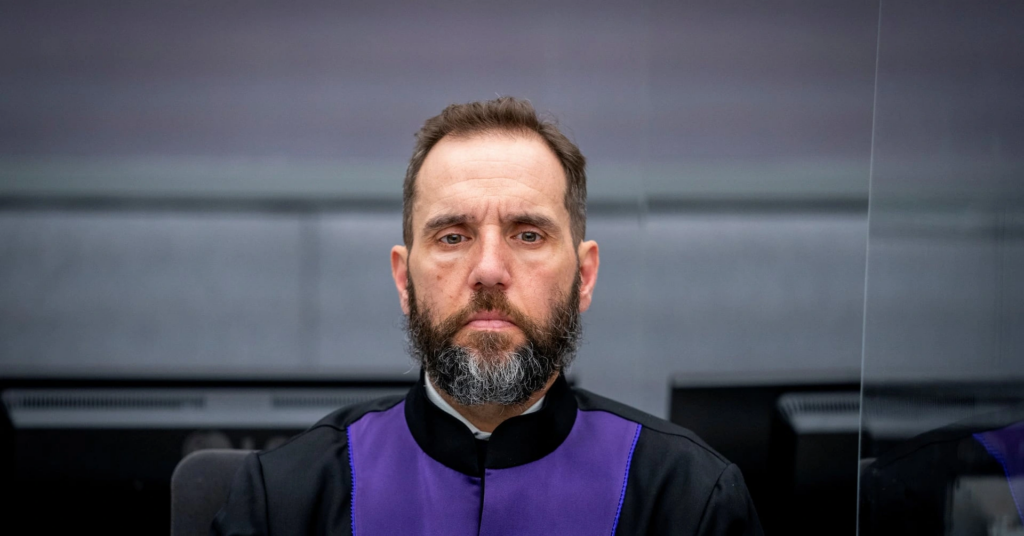
Critics argue that Smith’s team has weaponized federal investigations to target a former president, creating a chilling precedent for political accountability in the United States, while supporters insist that rigorous enforcement of the law is necessary regardless of partisan implications.
The subpoena represents not only a legal maneuver but also a symbolic escalation in what many observers describe as one of the most contentious and polarizing political dramas in modern American history, drawing attention from media outlets, social platforms, and public forums.
Republican lawmakers are framing Jordan’s actions as a defense of democratic principles, emphasizing the need to ensure that federal prosecutors cannot act with unchecked political bias, potentially undermining the credibility of the entire justice system in the eyes of the American public.
Meanwhile, Democrats and some legal experts warn that turning a federal investigation into a political spectacle risks eroding institutional norms, suggesting that Jordan’s strategy could deepen partisan divides and foster long-term mistrust in governmental processes.
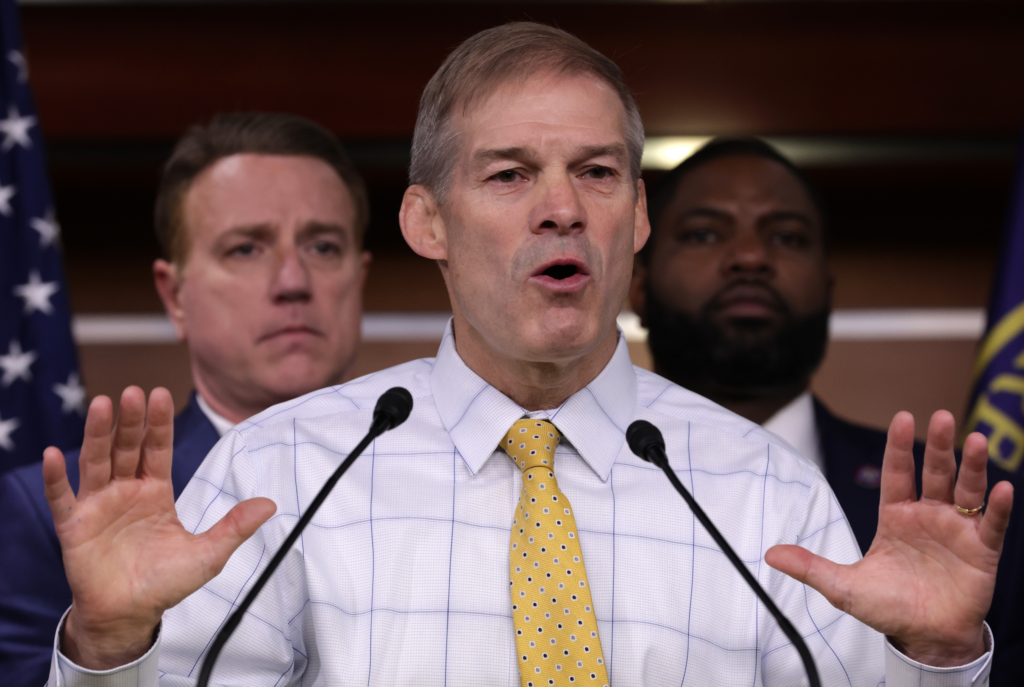
The timing of the subpoena, set for December 17, adds to the tension, coming shortly before the end-of-year congressional calendar, and prompting speculation that the Judiciary Committee intends to push a rapid and highly visible confrontation with Smith and the DOJ.
Social media platforms are already ablaze with commentary, with hashtags trending across Twitter, X, and other networks, as supporters of both sides debate the fairness, legality, and political implications of compelling a former special counsel to testify before Congress.
Legal analysts note that while subpoenas are a common tool for congressional oversight, the involvement of a high-profile former special counsel investigating a former president elevates the stakes dramatically, making this a rare intersection of law, politics, and media spectacle.
The public reaction has been intensely divided, with conservative audiences celebrating what they see as a bold move to hold federal prosecutors accountable, while liberal commentators warn that Jordan’s actions may amount to obstruction, politicization, or grandstanding at the expense of judicial integrity.
Many are comparing the unfolding situation to historical confrontations between Congress and executive branch investigations, drawing parallels to past impeachment inquiries, Watergate hearings, and other politically charged legal battles that defined eras of American governance.
The role of Jack Smith, who led high-profile prosecutions of Trump associates, is now under a microscope, with lawmakers questioning whether his team followed the law neutrally or allowed political considerations to influence prosecutorial decisions, a question that could redefine public trust in the justice system.
Observers note that Jordan’s aggressive approach might provoke counteractions from the Department of Justice, potentially setting up legal challenges over the limits of congressional authority and the scope of executive branch immunity in sensitive investigations involving political figures.
Public opinion is increasingly fractured, with surveys showing stark partisan divides in how Americans perceive the legitimacy of federal prosecutions and the appropriateness of congressional oversight, reflecting the broader polarization that dominates contemporary political discourse in the United States.
Social media commentary reflects not only political outrage but also viral engagement, with memes, opinion threads, and livestream discussions proliferating, creating a feedback loop that magnifies the controversy and ensures that the issue dominates national and international headlines.
Political strategists suggest that the timing and public visibility of the subpoena may have electoral implications, potentially energizing Republican voters ahead of upcoming midterm or local elections while challenging Democrats to defend institutional credibility under intense scrutiny.
Some experts caution that framing the subpoena as a purely partisan attack risks backfiring if public sentiment shifts in favor of Smith and the DOJ, emphasizing the delicate balance between oversight and perceived political theater in high-stakes national conflicts.
Meanwhile, legal scholars highlight that the deposition could produce explosive testimony, including internal DOJ communications, decision-making rationales, and potential conflicts of interest, which could dramatically influence public narratives about fairness, accountability, and rule of law.
Journalists covering the story point out that while Jordan has been vocal about partisan bias in federal prosecutions, this formal step represents a calculated escalation, signaling that the Judiciary Committee intends to pursue maximum transparency and maximum public exposure.
Critics argue that such a strategy could politicize what should be a neutral legal process, suggesting that forcing Smith to testify under the glare of public scrutiny may undermine prosecutorial independence and threaten to make legal inquiries subordinate to political calculations.
Supporters, however, contend that congressional oversight is not only warranted but essential, asserting that failing to challenge potential political bias in high-profile investigations could erode democratic accountability and leave future administrations vulnerable to unchecked prosecutorial power.
The anticipated deposition on December 17 has already prompted speculation about potential confrontations, media leaks, and partisan grandstanding, with pundits predicting that every statement and nuance from Smith could be dissected for political ammunition across multiple platforms.
Some observers note the historical significance of this confrontation, framing it as a critical test of institutional resilience, the separation of powers, and the ability of Congress to assert oversight authority without descending into purely partisan spectacle.
Legal observers also highlight that subpoenas often trigger negotiation, delay, or legal challenges, meaning that the December 17 date may mark the start of a protracted legal and political saga that could dominate headlines for weeks or even months.
The public’s appetite for drama is undeniable, as opinion polls, online engagement metrics, and trending discussions indicate unprecedented attention and participation in a debate that blends law, politics, and spectacle, making it highly shareable across digital media.
Some analysts argue that this could redefine how Americans view accountability, suggesting that the subpoena is not just about a former special counsel, but about broader questions of fairness, justice, and whether institutions can operate above partisan influence in an era of intense political polarization.
Meanwhile, advocates for Smith warn that any perceived intimidation or politicization could undermine the legitimacy of federal investigations more broadly, highlighting the risk that turning legal processes into public battles might discourage qualified individuals from taking roles in law enforcement or prosecution.
As the story develops, both sides of the political spectrum are preparing for a media battle, using every available platform to shape narratives, frame interpretations, and mobilize supporters, ensuring that the issue will not remain confined to legal circles but will dominate national discussion.
Experts note that the deposition may also reveal behind-the-scenes dynamics, including interactions between prosecutors, political advisors, and external actors, which could reshape public understanding of how legal decisions intersect with political strategy in the Trump era.
The subpoena’s broader implications are already being debated by constitutional scholars, who warn that congressional oversight must be balanced carefully against the risk of infringing on prosecutorial independence, a tension likely to fuel legal battles and public debate for months to come.
Meanwhile, social media continues to amplify the drama, as viral posts, opinion threads, and analysis videos flood platforms, creating a feedback loop of engagement, outrage, and discussion that ensures the story reaches audiences far beyond traditional news consumers.
Observers warn that the situation could set a precedent for future congressional investigations, potentially redefining how oversight functions in politically charged contexts and raising questions about the proper limits of legislative power in matters involving high-profile legal actors.
Conservative commentators frame Jordan’s action as a necessary check on potential abuses of power, insisting that the subpoena represents a critical step in ensuring fairness and accountability in a system where political influence can too easily intersect with legal authority.
Conversely, critics warn that this approach risks turning the justice system into a theater of political spectacle, where grandstanding replaces deliberation, and the public consumes conflict more than it receives clarity, potentially undermining trust in both legal and political institutions.
As December 17 approaches, all eyes are on Smith, Jordan, and the Judiciary Committee, with every media outlet, social commentator, and citizen participant watching for signs of defiance, compliance, or explosive revelations that could reshape the national conversation around justice and partisanship.
This confrontation underscores the fraught nature of U.S. political life today, where legal authority, media amplification, and public sentiment collide, creating a perfect storm in which every procedural move carries enormous symbolic, legal, and political weight.
Ultimately, the subpoena is more than a legal tool; it is a flashpoint for partisan debate, a test of institutional resilience, and a potential turning point in the ongoing struggle over accountability, perception, and the intersection of law and politics in contemporary America.
The Judiciary Committee, Jack Smith, and the broader public now face a high-stakes scenario, where the outcomes of testimony, media coverage, and political framing could influence perceptions of justice, fairness, and the legitimacy of government institutions for years to come.
As the nation braces for December 17, the unfolding drama promises to dominate headlines, social feeds, and public discourse, with each statement, revelation, and reaction magnified in a politically charged environment that thrives on controversy, division, and the spectacle of power.