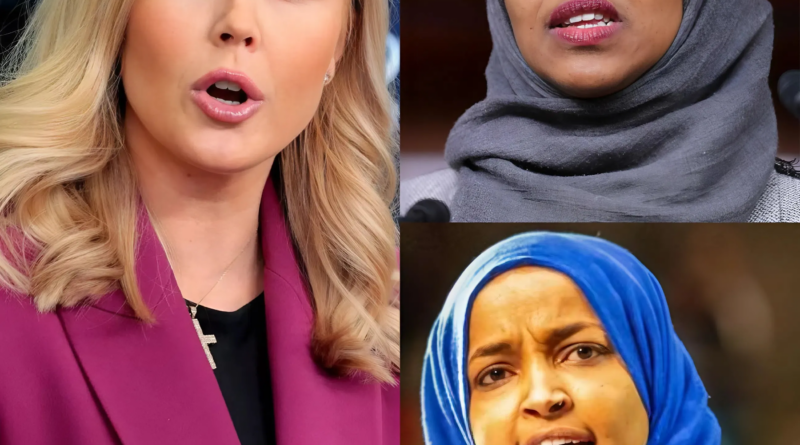
“SHUT UP, BARBIE” — Karoline Leavitt suddenly snapped at Ilhan Omar on live television, pointing directly at her and calling her “a puppet of the Democratic Party.”
Live television rarely feels alive anymore, until a single sentence detonates and reminds viewers that unscripted moments still possess the power to shake political culture.
When Karoline Leavitt snapped at Ilhan Omar, the studio atmosphere collapsed instantly, as if oxygen vanished and everyone watching sensed something irreversible had just happened.

Her words were blunt, sharp, and unapologetic, carrying the kind of raw hostility that television producers fear yet secretly know can redefine a media moment overnight.
Calling a sitting congresswoman “a puppet of the Democratic Party” was not merely an insult, but a deliberate challenge to authority, legitimacy, and the carefully managed tone of televised debate.
The phrase “Shut up, Barbie” landed like a slap heard across ideological lines, igniting outrage, applause, disbelief, and endless replay across social platforms within minutes.
This was not accidental rhetoric, but confrontation crafted for maximum collision, designed to fracture decorum and replace discussion with spectacle, dominance, and emotional shock.
Ilhan Omar’s stunned reaction mattered almost less than the silence that followed, because silence on live television often screams louder than rebuttal ever could.
For a few suspended seconds, viewers watched power shift in real time, as the usual rules of polite disagreement disintegrated under direct verbal aggression.
Supporters of Leavitt framed the moment as long overdue, celebrating what they saw as courage against establishment politics and scripted talking points.
Critics immediately condemned the exchange as misogynistic, degrading, and dangerous, warning that such language normalizes hostility toward women in political spaces.
Both sides shared the clip relentlessly, proving once again that outrage is the most efficient fuel for algorithmic amplification and cultural virality.
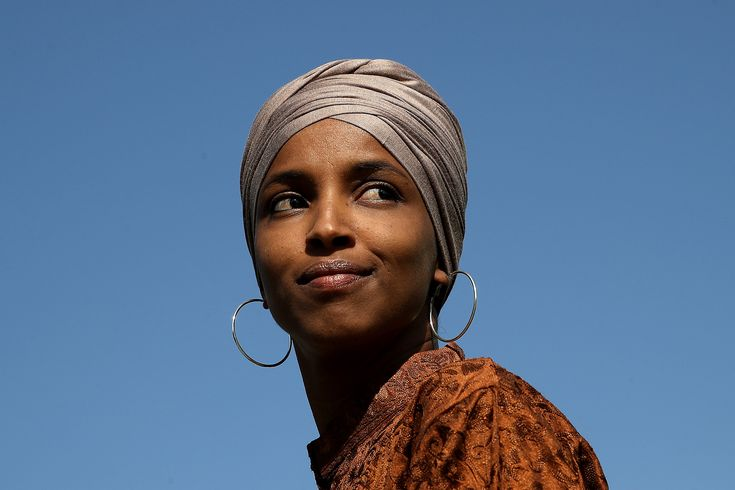
What made this moment particularly combustible was its simplicity, because one sentence cut through nuance and delivered conflict in its most digestible form.
In an era of fragmented attention spans, complex arguments often fail, while sharp confrontation travels faster than reason ever could.
Television networks understand this paradox intimately, promoting civility while benefiting financially from moments that shatter it completely.
Leavitt’s ultimatum did not exist in isolation, but reflected a growing appetite among audiences for unfiltered confrontation over measured dialogue.
Many viewers felt exhilarated, interpreting the exchange as authenticity breaking free from political theater and media-trained restraint.
Others felt deeply unsettled, fearing that politics is drifting further toward verbal violence, humiliation, and dehumanization as entertainment.
The clash also exposed how gendered language still operates as a political weapon, deliberately chosen to provoke emotional reactions rather than policy-focused responses.
Calling attention to appearance, silence, or obedience subtly reinforces power hierarchies that critics argue women are disproportionately subjected to.
Yet supporters countered that outrage itself proves effectiveness, insisting that disruption is the only way to challenge entrenched political narratives.
Social media transformed the moment into a cultural Rorschach test, revealing viewers’ values more clearly than any poll or survey.
Some saw Leavitt as fearless, others as reckless, but almost everyone agreed the moment was impossible to ignore.
That inevitability is precisely why such confrontations are becoming more common across news panels, podcasts, and livestreamed debates.
Attention has become currency, and conflict is its most reliable generator in a crowded digital marketplace.
Ilhan Omar’s political identity amplified the impact further, because she already occupies a symbolic space where controversy follows her relentlessly.
Every reaction, whether defending or condemning her, fed the same machine of engagement and polarization.
The studio blackout feeling described by viewers captured something deeper than surprise, signaling recognition that lines had been crossed publicly.
Once crossed, those lines rarely return to their original position, shifting expectations for future discourse permanently.
What happened immediately after the confrontation matters less than how it will be remembered, replayed, and weaponized moving forward.
Moments like this do not fade quietly, but evolve into reference points shaping how audiences interpret future political clashes.
For fans, critics, and undecided observers alike, the exchange forced uncomfortable questions about civility, power, and responsibility.
Is public humiliation now an acceptable substitute for debate, or a symptom of deeper democratic fatigue?
Does shutting someone down signal strength, or reveal an inability to engage beyond provocation and performance?
The viral afterlife of this moment suggests that answers matter less than reactions, because reactions drive reach, relevance, and revenue.
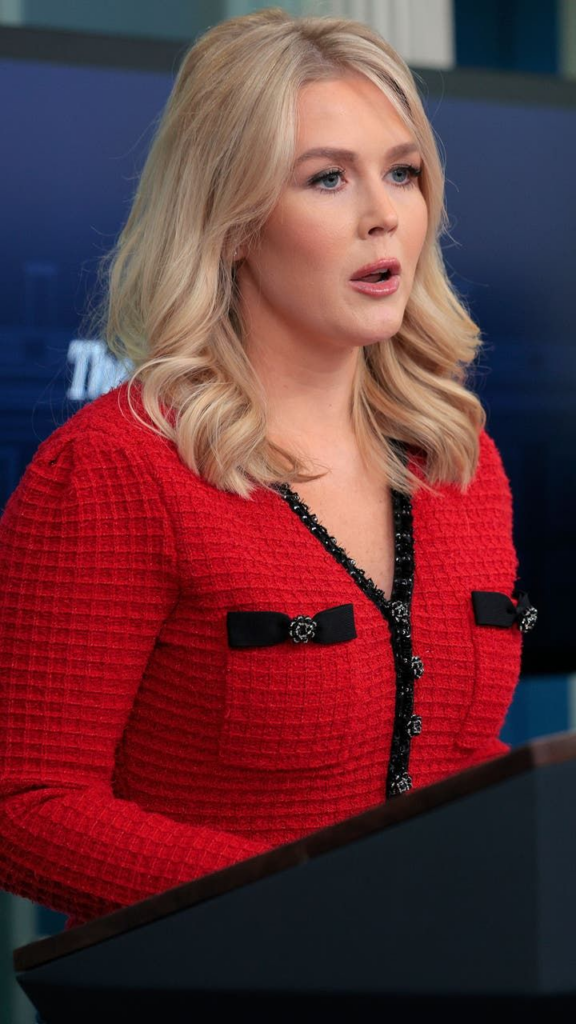
As clips continue circulating, each share adds another layer of meaning, outrage, and interpretation to an already volatile exchange.
Whether praised or condemned, the moment succeeded in its most fundamental objective: it made people stop scrolling and start arguing.
In today’s attention economy, that alone guarantees its place in the ever-expanding archive of political flashpoints.